



No honest average settlement exists. A California financial elder abuse case is worth the property taken, plus interest and enhanced damages, capped by what the defendant can actually pay. Watching a parent’s money disappear is painful, and questioning it is not overreacting.
In financial elder abuse claims, three drivers set the number: the amount taken, the level of proof, and collectibility. A worked $300,000 example below shows how they stack.
Under Welfare and Institutions Code § 15610.30, financial elder abuse means taking or keeping an elder’s or dependent adult’s property for a wrongful use, with intent to defraud, or by undue influence. Undue influence is pressure that overcomes a person’s free will.
Recovering stolen assets starts with the paper trail. Gather trust documents, bank statements and power of attorney records today, and note every amendment or transfer date.
Understanding Is A Financial Elder Abuse Case Worth?
A case is worth the value of the property taken, plus interest and any enhanced damages the proof supports, minus whatever cannot be collected. The drivers are how much was taken, which level of proof the facts meet, and what the defendant still holds.
Most of the money sits in trusts, deeds, beneficiary designations, and accounts run by a trustee or by an agent under a power of attorney. That is why probate court remedies shape the value as much as a civil lawsuit does.
Compensatory Damages And Interest
Compensatory damages return the property taken and add interest or lost profit on it from the date of the taking. This layer is the floor of every valuation. It needs only a preponderance of the evidence, meaning more likely true than not.
Financial tracing fixes the amount. We follow each dollar from the trust account to the purchase it funded. The date of each withdrawal starts the interest period for that sum.
Probate Code § 859 Double Damages
Double damages apply in a Probate Code § 850 petition when the court finds bad faith or financial elder abuse. The award is twice the value of the property recovered.
A § 850 petition asks the probate or trust court to recover property someone wrongly holds. Filing a trust petition of this kind lets the court order the property returned and then apply § 859.
Doubling is a total. A $300,000 taking becomes $600,000, including the returned property.
It does not add $600,000 on top. Courts have not read the statute’s wording uniformly, so we confirm current appellate law before valuing this layer.
Civil Code § 3294 Punitive Damages
Yes, punitive damages are possible, but only on clear and convincing proof of oppression, fraud or malice under Civil Code § 3294. The jury decides the amount. Clear and convincing proof is evidence that makes a fact highly probable.
Punitive damages are a separate, discretionary layer, not a guaranteed multiplier. Civil Code § 3345 can allow up to triple a penalty in actions that redress unfair or deceptive practices against seniors. Whether it reaches a family taking depends on the claims pleaded, so we verify the fit before relying on it.
Worked Valuation Of A $300,000 Taking
Valuation stacks layers in order: return of the $300,000, interest, § 859 doubling to $600,000 total, fees, then punitive damages. These numbers are illustrative, not a prediction. Assume a caregiver or adult child moved $300,000 out of a parent’s trust.
1. Return of property: tracing supports a judgment for the $300,000 taken.
2. Interest: interest runs on each withdrawal from its own date.
3. Section 859 doubling: a bad-faith or financial elder abuse finding brings the total to $600,000, including the returned $300,000.
4. Fees: a financial elder abuse finding requires reasonable attorney’s fees and costs under Welfare and Institutions Code § 15657.5(a). Clear and convincing proof of recklessness, oppression, fraud or malice allows more under § 15657.5(b).
5. Punitive damages: a jury may add them on clear and convincing proof.
The same facts can produce $300,000 without a bad-faith finding, $600,000 with one, or more with interest, fees and punitive damages. How the layers combine is the open question.
Section 859 doubling works like a penalty, so a court may decline to award it alongside punitive damages or § 3345 trebling for the same conduct. We check current case law before giving any range.
What Must A Plaintiff Prove To Recover?
The plaintiff must prove three things. The victim is an elder or dependent adult. The defendant took or kept property for a wrongful use or with intent to defraud.
The defendant knew or should have known it would cause harm. An elder is a California resident aged 65 or older under § 15610.27. A dependent adult is a person aged 18 to 64 whose physical or mental limits restrict normal activities or self-protection under § 15610.23.
Wrongful use is shown by conduct, not by what the defendant says they intended. California’s civil jury instructions, known as CACI, list these elements for the jury.
Proof Standards For Each Remedy
Compensatory damages and fees need a preponderance. Punitive damages, disinheritance and damages that survive death need clear and convincing proof. The proof level, not the size of the harm, decides the number.
- Remedy: Statute: Standard of proof
- Compensatory damages: Welf. & Inst. Code § 15610.30: Preponderance of the evidence
- Attorney’s fees and costs: Welf. & Inst. Code § 15657.5: Preponderance, with clear and convincing proof of recklessness, oppression, fraud or malice needed to lift death limits
- Punitive damages: Civ. Code § 3294: Clear and convincing proof of oppression, fraud or malice
- Double damages: Prob. Code § 859: Court finding of bad faith or financial elder abuse
- Disinheritance of the abuser: Prob. Code § 259: Clear and convincing
- Care-custodian presumption: Prob. Code § 21380: Gift presumed invalid, rebuttable only by clear and convincing evidence
Fees are not automatic in every elder case. In physical abuse or neglect cases, § 15657 requires clear and convincing proof before fees are awarded. Families who apply that rule to a financial case misjudge both the fees and the higher proof needed to keep damages alive after death.
Records That Prove Each Element
Bank statements prove the taking. Power of attorney or trustee accounting records prove the use.
Medical and capacity records prove vulnerability. An accounting is a written record of every dollar a fiduciary received and spent.
Each record also supports a damages layer. Transfer dates set the interest period. Forged or backdated signatures, reviewed by handwriting experts, support fraud and punitive claims.
Request an accounting in writing now. Preserving evidence early means saving originals, texts and emails before phones are replaced or accounts close.
What Determines Whether A Judgment Is Collectible?
A judgment is worth only the assets the defendant holds and the court can reach. Delay is the real risk, because a defendant can spend or move money while a family waits.
Five checks shape collectibility:
- Holdings: the defendant holds cash, real property or retirement accounts.
- Tracing: the money still traces, for example from the trust account to a house purchase.
- Insurance: a liability policy applies, though intentional-act exclusions typically bar coverage.
- Second defendant: a bank or financial institution assisted the taking and can be named.
- Lockdown: a lis pendens, which is a recorded notice of a claim to real property, or a § 850 petition holds the asset in place.
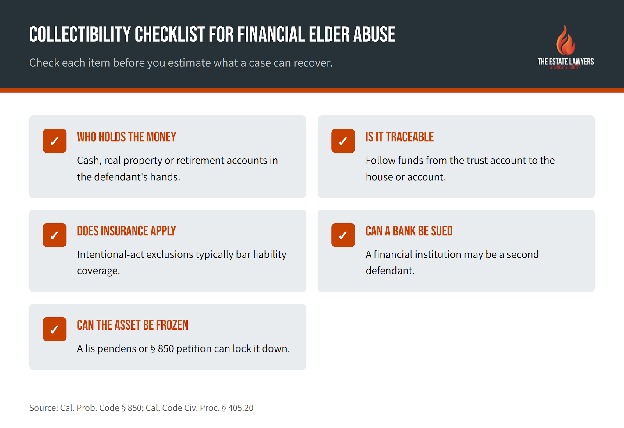
Figure 1: A judgment is worth only the assets that can be traced, reached and held. Source: Cal. Prob. Code § 850; Cal. Code Civ. Proc. § 405.20.
Tracing power of attorney transfers often leads to a house or account in the agent’s name. That asset becomes the target of the petition.
How Does Recovery Change After The Elder Dies?
After the elder dies, the personal representative or trustee brings the claim. CCP § 377.34 limits which damages survive, and heirs may also use § 850 and § 259.
A personal representative is the executor or administrator the probate court appoints. In many families, the money trail surfaces only after the parent has passed, and the estate becomes the plaintiff.
Living Elder Aged 70 Or Older
Yes, a living elder aged 70 or older may ask for trial preference under CCP § 36, which moves the case up the calendar. While alive, the elder can also recover pain and suffering damages, which raises value. The § 36 criteria appear in the deadline section below.
Deceased Elder And The Estate
When the elder has died, the claim survives through the estate or trust. Under CCP § 377.34, pain and suffering generally does not survive, which lowers the value.
Section 15657.5(b) lifts that limit on clear and convincing proof of recklessness, oppression, fraud or malice. A temporary change also allowed these damages in cases filed from 2022 through 2025, so we verify current law before valuing a new filing.
Heirs can use Probate Code § 259 to treat the abuser as having died before the elder. That bars the abuser’s inheritance and can move that share to the family.
How Do Civil, Probate And Criminal Recovery Differ?
A civil claim and a probate petition are controlled by the family and can reach enhanced damages. A criminal case is controlled by the prosecutor and yields court-ordered restitution.
Criminal penalties under Penal Code § 368 do not pay the family. Restitution under Penal Code § 1202.4 is limited to the loss.
| Path | Who controls | Standard of proof | Money recovered | Speed |
|---|---|---|---|---|
| Civil Elder Abuse Act claim | Victim or estate | Preponderance; clear and convincing for enhanced | Damages, fees, punitive | Trial preference if 70+ |
| Probate petition (§ 850, § 859) | Trustee, executor or heir | Bad-faith or abuse finding | Property back, double damages | Probate court calendar |
| Criminal case (§ 368, § 1202.4) | Prosecutor | Beyond a reasonable doubt | Restitution only | Set by prosecutor |
Figure 2: Only civil and probate paths let the family control the case and seek enhanced damages. Source: Cal. Welf. & Inst. Code § 15657.5; Prob. Code §§ 850, 859; Pen. Code §§ 368, 1202.4.
Reporting to Adult Protective Services or police does not bar the civil claim. The criminal case and the civil or probate case can proceed side by side.
What Filing Deadline Applies In California?
Courts have applied either a three-year period under CCP § 338 or a four-year period under CCP § 343, so the safe move is to file well inside three years. Welfare and Institutions Code § 15657.7 also sets a four-year period for financial elder abuse damages that runs from discovery. We verify which period fits the claims in your case.
Delayed discovery can help when the taking was hidden. The clock may start when the family learned, or reasonably should have learned, of it.
Trial preference under CCP § 36 requires age 70 or older, a substantial interest in the case, and health that makes preference necessary to protect that interest. When granted, trial is generally set within 120 days.
A case moves in five stages:
1. Records review: we gather statements, trust documents and medical records.
2. Filing: we file the civil complaint, the § 850 petition, or both.
3. Discovery: depositions, subpoenas and financial tracing build the proof.
4. Mediation: the parties test settlement where the facts allow.
5. Trial: the court or jury decides liability and damages.
Our overview of how long estate litigation takes explains what moves each stage.
Which Mistakes Reduce A Case’s Value?
Four mistakes cut recovery most: leaving a signed gift document unchallenged, waiting while funds can be traced, paying the abuser’s debts, and distributing the estate before the claim ends.
- Unchallenged gift document: the abuser later calls the gift voluntary, so check for a Certificate of Independent Review under Probate Code § 21384, which can defeat the care-custodian presumption.
- Waiting: funds mix with other money or leave the court’s reach.
- Paying the abuser’s debts: the payment can read as family acceptance of the transfers.
- Early distribution: the executor empties the estate and leaves nothing to collect from.
The same review applies to a coerced home gift, where a recorded deed looks voluntary on paper.
Frequently Asked Questions
Examples Of Financial Elder Abuse?
Examples include caregiver gifts, power of attorney misuse, forged signatures, last-minute trust amendments and home transfers. Bank statements prove misuse, handwriting experts test signatures, and medical records show vulnerability at the time of an amendment. Each supports recovery through a civil claim, a § 850 petition or a § 21380 presumption.
Common Elder Financial Abuse Red Flag?
A sudden change to a trust, deed or beneficiary designation is a common red flag, especially after isolation of a parent. Note the date of the change. Then request the documents and an accounting.
Power Of Attorney Abuse Red Flags?
Transfers to the agent, missing records, no accounting and unexplained account changes are red flags. A power of attorney makes the agent a fiduciary, meaning a person legally bound to act in the principal’s interest. The agent must account for every transaction.
How To Report Elder Financial Abuse?
Report to Adult Protective Services in the elder’s county, which accepts anonymous reports, or to local police. Reporting does not stop a civil claim. Keep copies of every record you share.
Let Us Resolve Your Probate Dispute
Our trust and estate litigators review the records first, then file where assets are at risk. That order protects the money and the evidence in financial elder abuse cases. Here to guide.
Here to fight. Here for you.
Gather the trust documents and bank statements today, and note every amendment date.