



Breach of fiduciary duty in California is a fiduciary’s failure to meet a legal duty owed to someone whose money or decisions they control, causing that person harm. When statements stop arriving or transfers look odd, doubting a trustee or agent you once trusted is a reasonable response. Four questions shape most fiduciary duty disputes: who owes the duty, how to spot a breach, which deadline applies and what the court can order.
We get the records first. Then we decide whether to file. Delay helps whoever is moving the money, and early records show where it went.
If you suspect a trustee, executor or agent is mishandling trust or estate assets, contact The Estate Lawyers to request the records and review your options.
Key Takeaways
- Four elements: a breach claim under CACI 4101 requires a fiduciary relationship, a breach of duty, causation and harm.
- Separate deadlines: the 120-day trust contest period under Probate Code §16061.8 does not limit breach claims, which generally run three or four years.
- Strong remedies: courts can order repayment, removal, a constructive trust and up to double damages for bad faith under Probate Code §859.
What Is Breach Of Fiduciary Duty In California?
Breach of fiduciary duty is a fiduciary’s failure to perform a legal duty owed to another person, and that failure harms the person. California juries are told to find four elements under CACI 4101, the standard civil jury instruction. The claimant proves each one: a fiduciary relationship, a breach of duty, causation and harm.
This claim differs from a trust contest, which is a court case attacking whether a trust or amendment is valid. A breach claim accepts the document and challenges how the fiduciary carried it out. Ordinary negligence needs no special relationship, while a fiduciary claim depends on one.
Financial elder abuse under Welfare and Institutions Code §15610.30 can arise from the same facts and carries its own remedies. Courts weigh it alongside the rules on fiduciary duty in estate law, so one set of bank records can support both claims.
Who Owes Fiduciary Duties In California?
Trustees, executors, agents under a power of attorney, conservators and attorneys owe fiduciary duties. The law imposes the duty when one person must rely on another to hold assets or make decisions. Each role has its own governing law and its own typical breach:
- Trustee: Probate Code §§16000-16015, with loyalty under §16002 and the prudent person standard under §16040. Example breach: the trustee buys trust property for personal use.
- Executor: Probate Code §§9600-9601 require ordinary care and diligence over the estate. Example breach: letting insurance lapse on a vacant estate house.
- Agent under a power of attorney: Probate Code §4230 et seq. require the agent to act for the principal, not for personal benefit. Example breach: moving the principal’s savings into the agent’s own account.
- Conservator: Probate Code §2100 et seq. govern a person the court appoints to manage someone unable to handle their own affairs. Example breach: paying the conservator’s household bills from the conservatee’s funds.
- Attorney: the Rules of Professional Conduct and Business and Professions Code §6068 require client confidentiality and avoidance of conflicts. Example breach: using client funds held in trust.
What Are The Five Fiduciary Duties?
The five commonly cited fiduciary duties are loyalty, care, good faith, disclosure and confidentiality. That count is a convention, not a California statutory list, so a claim must name the specific statute. For trustees, three duties carry most cases:
- Loyalty: Probate Code §16002 bars the trustee from acting in self-interest, and §16004 makes self-dealing transactions voidable, meaning a court can undo them.
- Care: §16040 sets the prudent person standard, and §§16045-16054 apply it to investments.
- Disclosure: §§16060-16064 require the trustee to give beneficiaries information and accountings.
Which Signs Show Breach Of Fiduciary Duty?
Seven breaches are common in trusts and estates: self-dealing, commingling, failure to account, unequal treatment, poor investing, delay and outright theft. Commingling means mixing trust money with the trustee’s own money.
Four red flags appear repeatedly in the cases we review:
- Accounts stop arriving.
- Assets sell quickly to insiders.
- A parent is isolated from family members.
- A power of attorney is used right after a suspicious late amendment.
Your concern is reasonable, and it is not an accusation. Each of these trustee misconduct warning signs is a reason to investigate, and the records will confirm or end the suspicion. Documenting early preserves both assets and evidence.
How Does A Beneficiary Bring A Claim?
A beneficiary brings a claim in three steps: a written request for information, a review of the records, and a petition in the Superior Court probate department if answers do not come.
- Written request: ask the trustee in writing for the trust terms, statements and an accounting.
- Record review: compare what came in, what went out and what remains.
- Petition: file in the probate department of the Superior Court, such as in Orange County or San Diego County.
Standing, meaning the right to file, belongs to beneficiaries and certain other interested persons. When the records answer the question, no petition is needed.
Which Records Should You Request First?
Request the trust instrument and amendments, account statements, deeds and title history, appraisals, tax returns and the trustee’s written accountings. An accounting is a written report of what the trustee received, spent and still holds.
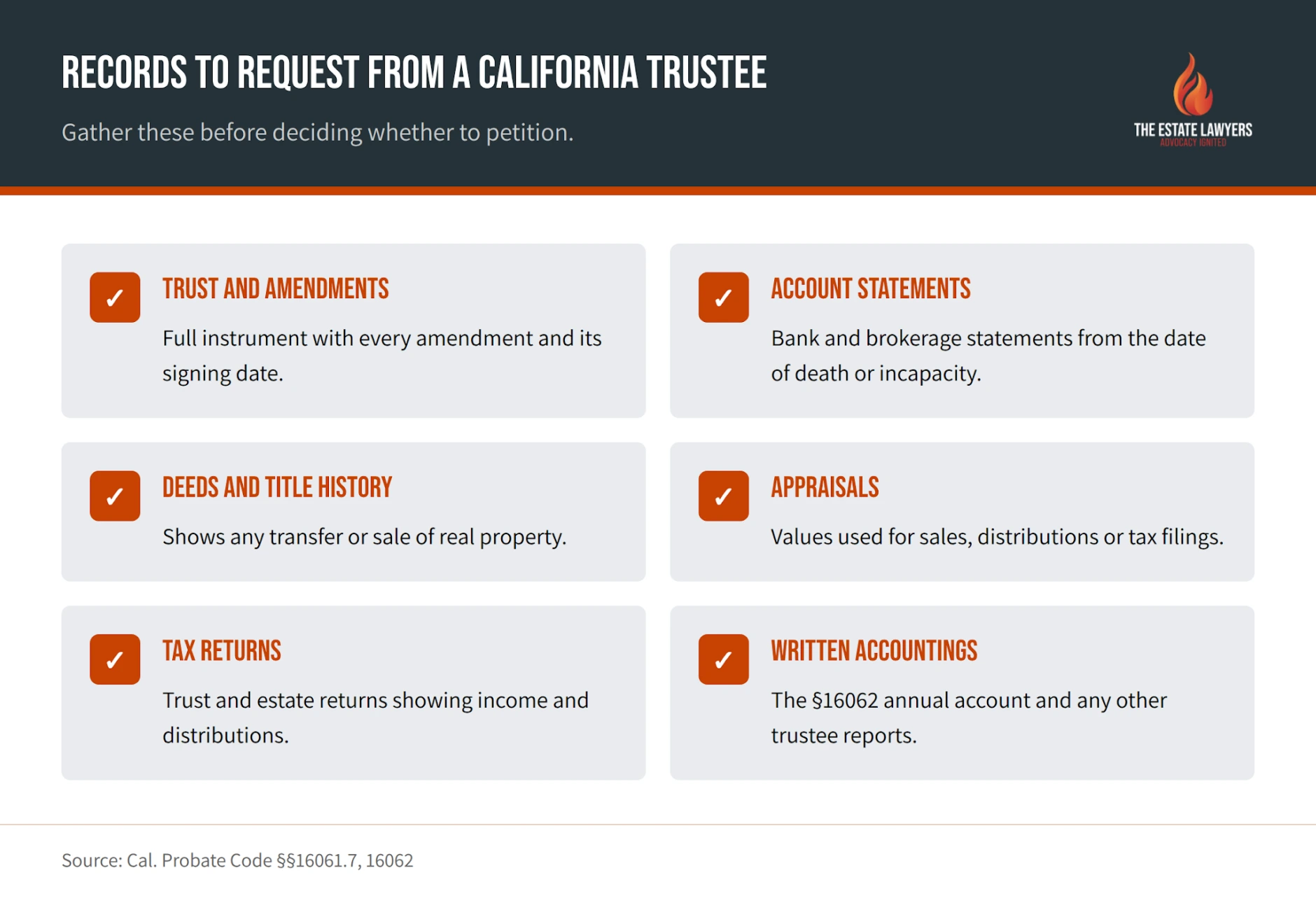
Figure 1: These six records show whether a trustee breached a duty. Source: Cal. Probate Code §§16061.7, 16062.
Under Probate Code §16061.7, the trustee must send a notice within 60 days after the trust becomes irrevocable, usually at the settlor’s death. Under §16062, the trustee must account at least once a year.
Do not confuse these two deadlines. The 120-day period under §16061.8 limits contests of a trust’s validity. It does not limit claims that a trustee breached duties.
Two mistakes follow from that confusion. One is waiting out the 120 days before acting on a doubtful amendment, which ends the right to contest it. The other is assuming an expired contest deadline ends a breach claim, when your rights as a beneficiary to an accounting and repayment continue.
How Does A §17200 Petition Work?
A Probate Code §17200 petition asks the probate court to decide a trust dispute, including breach and accounting, after notice to interested parties. The statute covers “compelling redress of a breach of the trust” and compelling an accounting. Notice of the hearing must go out at least 30 days before it.
The petition states the duty, the breach and the relief sought. Filing a trust petition keeps the dispute in the department that hears trust matters. A civil complaint fits claims that reach beyond the trust, such as claims against a buyer or relative who is not a trustee.
Which California Deadline Applies To Breach?
The period depends on the claim: three years after an adequate report under Probate Code §16460, otherwise generally four years under CCP §343, with shorter periods for fraud and attorney claims. Four branches decide which clock runs:
- Trustee report: a report that adequately disclosed the claim and gave notice of the time limit starts three years under Probate Code §16460.
- No such report: the general four-year period under CCP §343 applies to other fiduciaries, with delayed discovery, and §16460 runs three years from discovery for trustees.
- Fraud: three years from discovery under CCP §338(d).
- Attorney defendant: one year from discovery and four years outer under CCP §340.6.
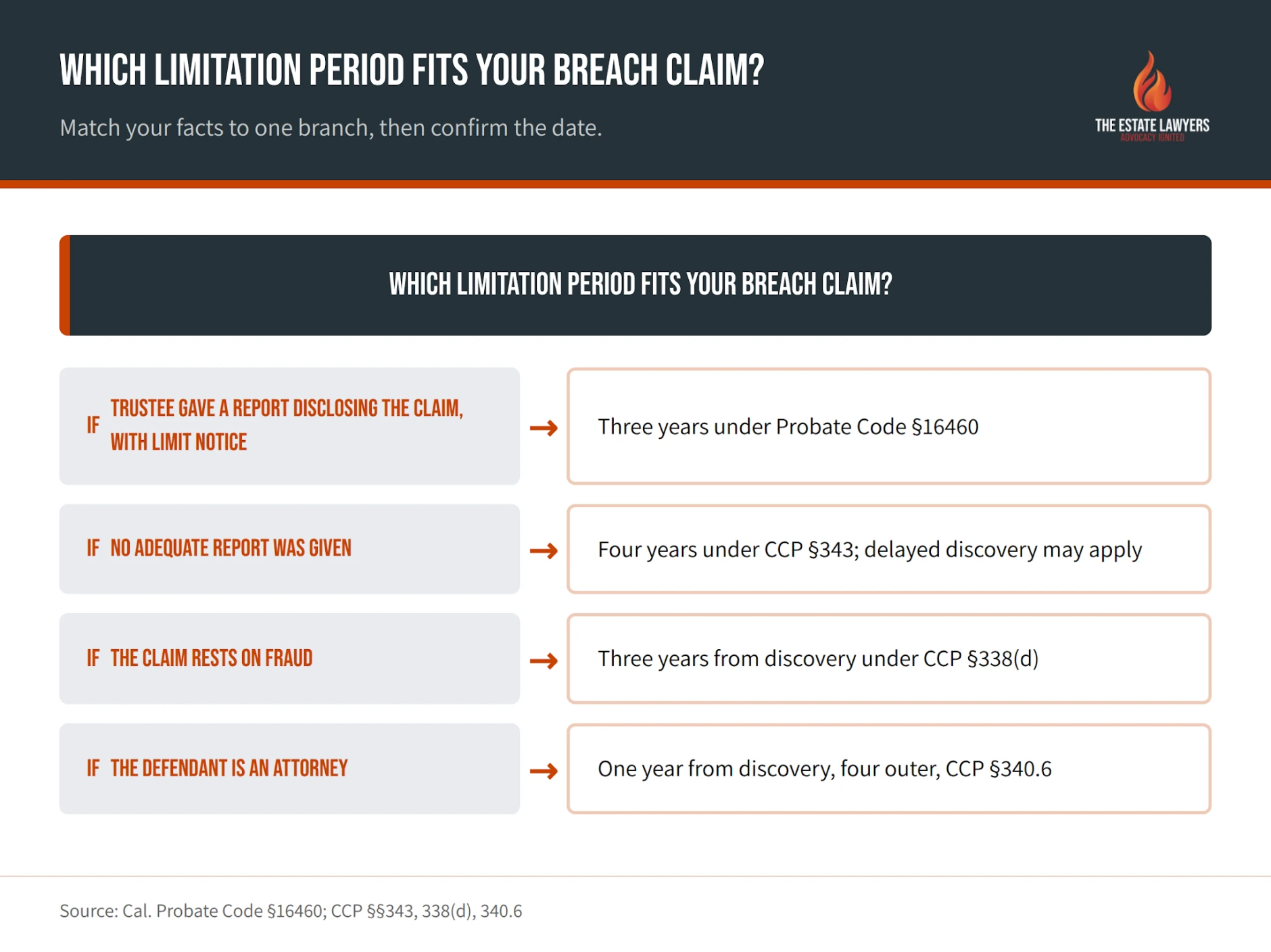
Figure 2: The kind of claim and the report received pick the clock. Source: Cal. Probate Code §16460; CCP §§343, 338(d), 340.6.
The gravamen, meaning the core of the claim, picks the period, not the label on the pleading. When the person harmed is 65 or older, check financial elder abuse claims on the same facts, because that law carries its own period and remedies.
What Remedies Can A California Court Order?
A California court can order a fiduciary to repay losses, account, step down and return assets, and it can add enhanced damages for bad faith. The remedy depends on the proven loss, the gain to the fiduciary and the fiduciary’s state of mind.
Which Remedies Do Probate Judges Use?
Probate judges use surcharge, compelled accountings, removal, constructive trusts, damages and, for bad faith, double or punitive damages. Surcharge is an order that makes the fiduciary personally repay a loss. Probate Code §§16420 and 16440 set the remedies for a “breach of trust,” and §15642 sets the grounds for removing a trustee.
A constructive trust under Civil Code §2224 treats wrongfully obtained property as held for its rightful owner. It lets the court follow money into accounts or real estate, which is why tracing transferred assets starts with bank records.
When the victim is an elder, Welfare and Institutions Code §15657.5 adds enhanced remedies.
How Much Must A Trustee Repay?
Take a hypothetical $85,000 withdrawal from a $1.2M trust to pay personal debts. The trustee must restore $85,000 plus gain and interest, with up to $170,000 exposure on bad faith.
- Loss: $85,000, the amount withdrawn.
- Gain: under Probate Code §16440, any profit the trustee made, or the trust would have earned, is added.
- Interest: Probate Code §16441 uses the legal rate on judgments, 10 percent simple. Assuming two years, that adds about $17,000.
- Bad faith: Probate Code §859 allows up to twice the value recovered, so up to $170,000.
Punitive damages under Civil Code §3294 are separate. They require clear and convincing proof of malice, oppression or fraud.
Can Breach Of Fiduciary Duty Mean Jail?
No, breach of fiduciary duty is a civil claim. The same conduct can still be prosecuted as a crime, and the district attorney decides whether to charge, not the beneficiary.
Three criminal statutes reach this conduct:
- Penal Code §487: grand theft.
- Penal Code §§503 and 506: embezzlement, including by trustees and agents.
- Penal Code §368(d): theft from an elder or dependent adult.
On conviction, Penal Code §1202.4 orders restitution to the victim. In the civil case, a person who violates a court order, such as an asset freeze or accounting order, can be held in contempt under CCP §1209.
How Does California Treat Family Trustees?
California lets a trustee who is also a beneficiary take reasonable compensation and act within the trust’s terms, but self-dealing is voidable under Probate Code §16004. Most disputes we see involve a sibling or parent serving as trustee.
- Allowed: reasonable compensation, and living in a trust property only if the trust permits it.
- Self-dealing: buying, borrowing or renting trust property on favorable terms for oneself.
- Exculpation clauses: under §16461, they cannot shield intentional, bad-faith or recklessly indifferent breaches.
- No-contest clauses: §21311 limits enforcement, and a breach petition is generally not a contest that triggers one.
A family trustee who acted in good faith with imperfect records can still defend the accounts with receipts and testimony.
How The Estate Lawyers Handles These Petitions
We get the records first, because they show where the case stands. Then we decide whether to file, and we explain why. Amy L. Gostanian, a certified specialist and former chair of the Orange County Bar Association Conservatorship Section, leads our trust litigation work alongside our trust and estate litigators.
What we need from you is short: the trust documents and the dates of any trustee reports you received. Where the facts allow, the aim is keeping the legacy and the family together. Gather those papers today.